
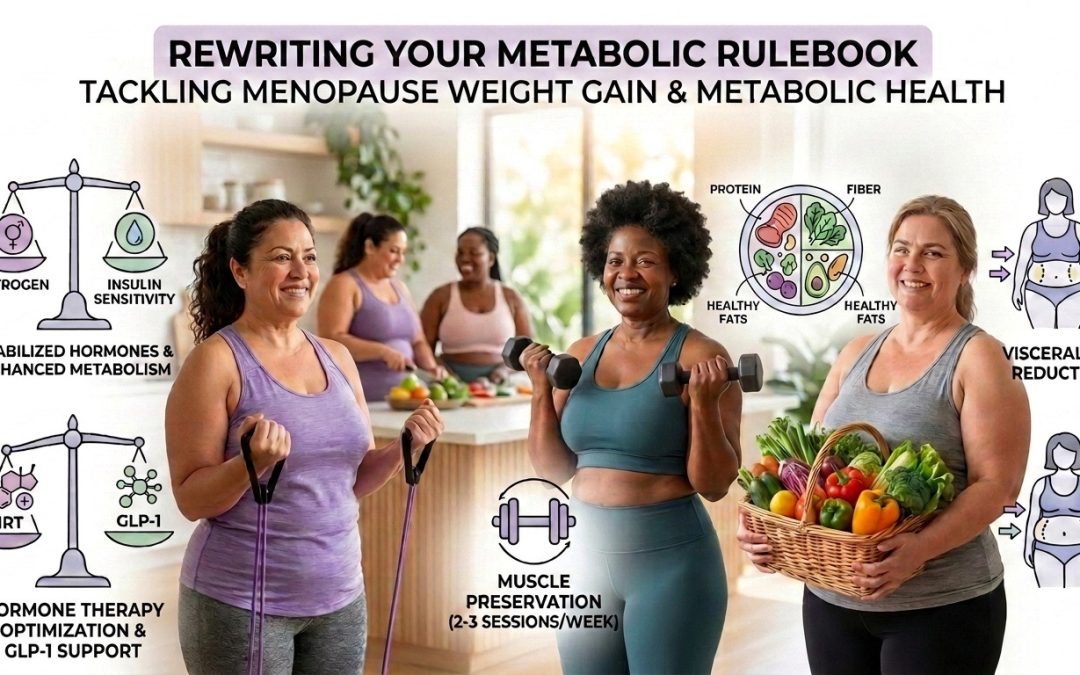
For many women, menopause isn’t just about hot flashes and mood swings; it’s a frustrating battle against a changing body, specifically the dreaded “menopause belly.” ditching the old “just eat less” advice and embracing a more sophisticated, multi-pronged approach.
The truth is, your body isn’t just “being difficult.” The significant drop in estrogen during menopause literally rewrites your metabolic rulebook. Fat storage shifts from hips and thighs to your abdomen (that stubborn visceral fat), and your resting metabolism slows down. What worked in your 30s simply won’t cut it anymore.
So, how do we fight back effectively? Let’s dive into the most promising strategies today.

The New Power Couple: HRT + GLP-1s
This is perhaps the biggest breakthrough of the last few years. Recent clinical data (from late 2025 and early 2026) suggests that combining Menopausal Hormone Therapy (MHT/HRT) with GLP-1 receptor agonists (medications like tirzepatide or semaglutide) offers the most significant medical intervention for menopause-related weight loss.
- The Synergy: While HRT isn’t a weight-loss drug itself, it’s a metabolic stabilizer. It helps mitigate fat redistribution, improves sleep, and boosts mood – all factors that indirectly support weight management. A landmark 2026 Mayo Clinic study found that postmenopausal women on MHT lost a staggering 35% more weight when also taking tirzepatide compared to those not on hormone therapy. The HRT sets the stage, and the GLP-1 (which suppresses appetite and enhances insulin sensitivity) delivers amplified results.

Beyond Hormones: Smarter Medical & Lifestyle Choices
Even if HRT isn’t for you, there are advanced strategies to consider:
- Weight-Favorable Medications: If you’re treating other menopausal symptoms like mood swings or hot flashes, your doctor now has an arsenal of “weight-favorable” medications. Newer options like fezolinetant or venlafaxine are prioritized, while older medications known for weight gain (like some older antidepressants) are often avoided.
- Rethink Your Movement: Prioritize Muscle. Forget endless cardio; the real game-changer in midlife is muscle preservation. You start losing muscle mass rapidly after age 50, and muscle is your metabolic engine. Aim for 2-3 resistance training sessions per week – lift weights, use resistance bands, or do bodyweight exercises.
- Protein is Power. To support that muscle and keep you feeling full, amp up your protein intake. Experts now recommend 1.2 to 1.5 grams of protein per kilogram of body weight daily. Think lean meats, poultry, fish, eggs, dairy, and legumes. If you follow a plant-based or plant-forward diet, you can swap animal protein options for dense, complete or high-yield plant sources such as seitan, tempeh, edamame, tofu and lentils.
- The “200-Calorie Rule”: It’s a hard truth, but your body simply needs less fuel. On average, women in their 50s require about 200 fewer calories per day than in their 30’s just to maintain the same weight. Awareness is key!
- The Overnight Weight Loss Ally: Chronic sleep deprivation (less than 5 hours) isn’t just tiring; it wreaks havoc on your hunger hormones (ghrelin and leptin), increasing your risk of significant weight gain. Prioritize quality sleep as if your metabolism depends on it – because it does!
- Strategic Nutrition:
- Fiber Up: A high-fiber diet (lots of fruits, vegetables, whole grains, and legumes) helps manage blood sugar and supports a healthy gut microbiome, which can influence weight.
- Limit Alcohol: Alcohol not only adds empty calories but can worsen hot flashes and directly contribute to that stubborn “menopause belly” by promoting visceral fat storage.

Take Control: Talk to Your Doctor
The journey through menopause is unique for every woman, and so is the best approach to weight management. The critical takeaway from 2026? You have more options than ever before.
Don’t settle for feeling frustrated. Schedule an appointment with a weight loss specialist or a primary care provider well versed in managing metabolic health issues. Come prepared with questions about HRT, GLP-1s, and other medical strategies. Discuss your lifestyle, your current challenges, and your goals.
You can rewrite your metabolic rulebook and feel strong, vibrant, and confident in your body again. It’s time to move beyond the old narratives and embrace the cutting-edge solutions available today.


Recent Comments